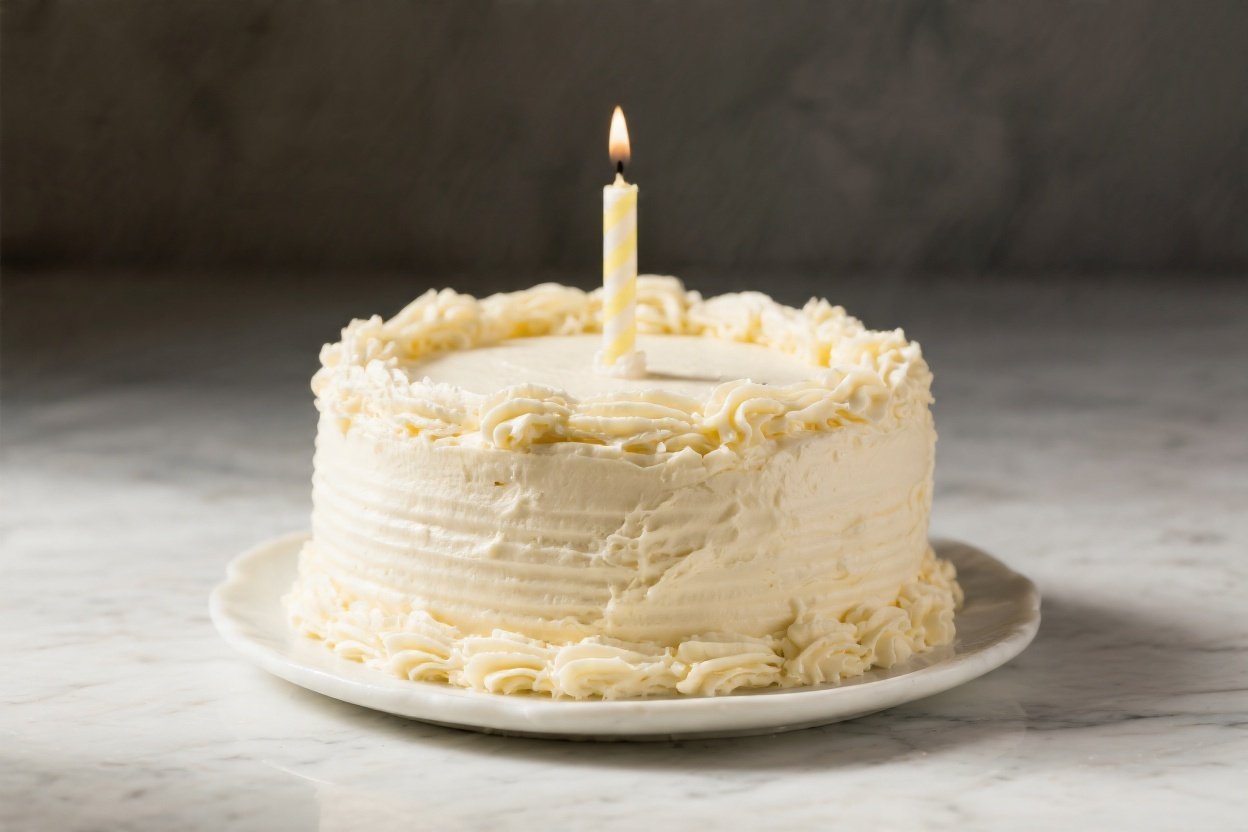
Classic Vanilla Birthday Cake – Soft, Buttery, and Celebration-Ready
A great birthday cake doesn’t need to be fussy. It needs to be soft, tender, and full of warm vanilla flavor with a creamy frosting that makes everyone smile. This classic vanilla birthday cake delivers all that without complicated steps or hard-to-find ingredients.
Whether you’re baking for a child’s party or a cozy family get-together, this cake feels special and familiar. If you’ve ever wanted a reliable, party-proof vanilla cake, this is the one to bookmark.
What Makes This Special
This recipe balances flavor and texture. The cake layers are buttery, moist, and light, thanks to a mix of butter and oil for both taste and softness.
A touch of sour cream ensures a tender crumb without turning the batter heavy. Real vanilla extract (or paste) gives the cake a clean, classic flavor that pairs perfectly with fluffy buttercream. And best of all, the method is straightforward, with clear steps that set you up for success.
Shopping List
- All-purpose flour – for structure
- Granulated sugar – for sweetness and moisture
- Baking powder – to help the cake rise
- Fine salt – to balance flavor
- Unsalted butter – room temperature
- Neutral oil (canola or vegetable) – for moisture
- Large eggs – room temperature
- Whole milk – room temperature
- Sour cream – for tenderness
- Pure vanilla extract or vanilla bean paste
- Confectioners’ sugar – for the frosting
- Heavy cream or whole milk – to loosen frosting
- Pinch of salt – for the frosting
- Sprinkles (optional but fun)
How to Make It
- Prep your pans and oven: Heat the oven to 350°F (175°C).
Grease and line two 8-inch round cake pans with parchment on the bottom. Lightly flour the sides or use baking spray with flour.
- Measure carefully: For best results, spoon flour into your measuring cup and level it with a knife. Accurate measuring keeps the cake light and prevents dryness.
- Combine dry ingredients: In a medium bowl, whisk together 2 1/2 cups all-purpose flour, 2 1/2 teaspoons baking powder, and 1/2 teaspoon fine salt.
Set aside.
- Cream the butter and sugar: In a large bowl, beat 1/2 cup unsalted butter (softened) with 1 1/2 cups granulated sugar on medium-high until pale and fluffy, about 3 minutes. This step builds structure and lightness.
- Add oil and vanilla: Mix in 1/3 cup neutral oil and 2 teaspoons vanilla extract (or 1 teaspoon paste) until smooth and glossy.
- Beat in the eggs: Add 4 large eggs, one at a time, beating well after each. Scrape the bowl as needed.
The batter should look creamy and well-emulsified.
- Mix the wet ingredients: In a small bowl or measuring cup, whisk together 3/4 cup whole milk and 1/2 cup sour cream. This adds richness and moisture.
- Alternate dry and wet: Add the dry ingredients to the butter mixture in three additions, alternating with the milk-sour cream mixture in two additions (dry–wet–dry–wet–dry). Mix on low just until combined. Do not overmix.
- Divide and smooth: Evenly divide the batter between the pans.
Smooth the tops with a spatula and tap each pan lightly on the counter to release air bubbles.
- Bake: Bake for 25–30 minutes, or until the tops are set and a toothpick inserted into the center comes out clean with a few moist crumbs. Avoid overbaking.
- Cool completely: Let cakes cool in the pans for 10 minutes, then turn out onto a rack. Peel away parchment and cool fully before frosting.
- Make the frosting: Beat 1 cup unsalted butter (softened) until creamy, about 2 minutes. Add 3 1/2–4 cups confectioners’ sugar, a pinch of salt, 2 teaspoons vanilla, and 2–4 tablespoons heavy cream (as needed).
Beat on medium-high for 2–3 minutes until light and fluffy. Adjust cream for spreadable consistency.
- Level, if needed: If your cake domed, use a serrated knife to level the tops so they stack evenly.
- Assemble: Place one layer on a serving board. Spread about 1 cup of frosting over it. Top with the second layer.
Apply a thin crumb coat over the whole cake and chill for 15 minutes.
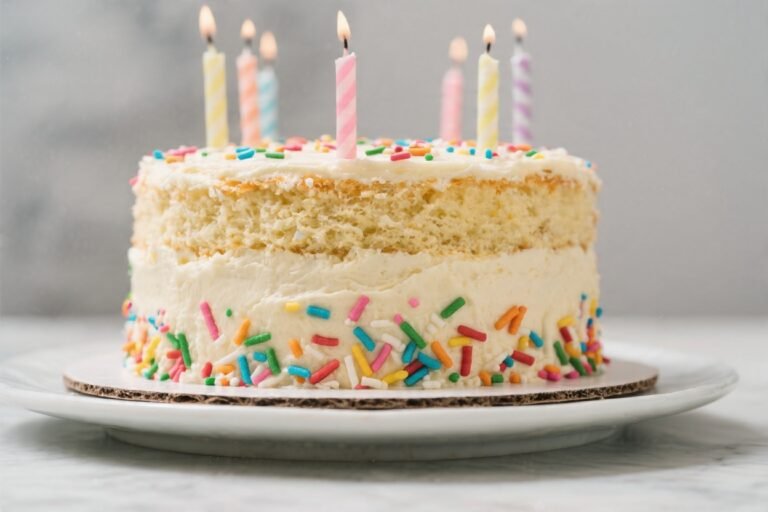
- Finish frosting: Spread the remaining frosting smoothly over the cake. Add sprinkles along the base or on top for a classic birthday look.
- Slice and celebrate: For clean slices, warm a sharp knife in hot water, wipe it dry, and cut. Repeat between slices for neat edges.
Keeping It Fresh
Cover the cake loosely and keep it at cool room temperature for up to 2 days.
If your kitchen is warm or humid, refrigerate it, but let it sit out for 45–60 minutes before serving so the crumb softens. Unfrosted layers can be wrapped tightly and frozen for up to 2 months. Thaw in the fridge overnight while still wrapped to prevent condensation from making the cake soggy.
Benefits of This Recipe
- Consistently moist thanks to the butter-and-oil combo and sour cream.
- Beginner-friendly method with simple, repeatable steps.
- Clean vanilla flavor that pairs with almost any filling or topping.
- Flexible format—bake as cupcakes, sheet cake, or layered celebration cake.
- Make-ahead friendly with freezable layers and a sturdy frosting.
Pitfalls to Watch Out For
- Overmixing the batter: This can create tunnels and a tough crumb. Mix just until no dry streaks remain.
- Cold ingredients: Cold eggs and dairy don’t blend as well and can curdle the batter.
Room temperature is key.
- Overbaking: A few extra minutes can dry out the cake. Start checking at 24 minutes.
- Thin frosting: If your buttercream feels loose, add more confectioners’ sugar or chill it briefly to firm up.
- Uneven layers: Weigh the batter or use a measuring cup to divide it evenly between pans.
Alternatives
- Gluten-free: Use a cup-for-cup gluten-free flour blend that includes xanthan gum. Let the batter rest 10 minutes before baking.
- Dairy-free: Swap butter for a dairy-free baking stick, sour cream for dairy-free yogurt, and milk for unsweetened almond or oat milk.
Choose a dairy-free frosting.
- Egg-free: Replace each egg with 3 tablespoons aquafaba, or use a commercial egg replacer according to package directions. Expect a slightly denser crumb.
- Filling upgrades: Add strawberry jam, lemon curd, or a thin layer of chocolate ganache between layers.
- Frosting twists: Try vanilla bean buttercream, whipped cream cheese frosting, or a light chocolate frosting for contrast.
- Pan size swaps: Bake in a 9×13-inch pan for 30–35 minutes, or make 24 cupcakes baked 18–22 minutes.
FAQ
Can I use cake flour instead of all-purpose?
Yes. Use the same volume (2 1/2 cups) of cake flour for an extra tender crumb.
The cake will be slightly lighter and a bit more delicate to handle, but very soft.
Why add both butter and oil?
Butter gives rich flavor and structure, while oil stays liquid at room temperature, keeping the crumb moist for days. Together, they create a buttery taste with lasting softness.
Do I have to use sour cream?
No, but it helps. You can swap it for plain full-fat yogurt.
The goal is gentle acidity and extra moisture to keep the cake tender.
How do I get a stronger vanilla flavor?
Use vanilla bean paste or add the seeds of half a vanilla bean to the batter or frosting. A small splash of almond extract (1/8 teaspoon) can also enhance vanilla without tasting like almond.
My cake domed. What did I do wrong?
Nothing major.
Doming often comes from oven temperature running slightly hot or overfilled pans. Level the tops with a serrated knife or use cake strips to help layers bake flatter.
Can I make the cake ahead?
Absolutely. Bake the layers up to two days ahead, wrap well, and refrigerate.
Or freeze for up to two months. Frost the day you plan to serve for best texture.
How do I keep the frosting white and fluffy?
Beat it well to incorporate air, use clear vanilla if you want a very white look, and add cream gradually until it’s spreadable. If it warms up, chill for 10 minutes and re-whip.
What if I don’t have two 8-inch pans?
Use two 9-inch pans and reduce baking time slightly, or bake in one 9×13-inch pan and increase the time.
Check often and use the toothpick test.
Can I add sprinkles to the batter?
Yes, for a funfetti twist. Fold in 1/2 cup rainbow jimmies at the end. Avoid nonpareils, which tend to bleed color.
How do I store leftovers?
Keep slices in an airtight container at room temperature for up to 2 days or refrigerate for up to 5.
Bring to room temp before serving for the best texture.
Final Thoughts
This classic vanilla birthday cake is the kind of recipe you come back to year after year. It’s simple to make, reliable, and tastes exactly like a celebration should—light, buttery, and fragrant with vanilla. With a few smart steps and everyday ingredients, you can bake a centerpiece that looks great and tastes even better.
Light some candles, add a shower of sprinkles, and enjoy the kind of cake everyone asks for again next time.